
Powering the Development of Honduras
The history of Honduras' maquila industry formally began in 1976. What started beside Puerto Cortés gradually became one of the most important productive transformations in the country's modern history.
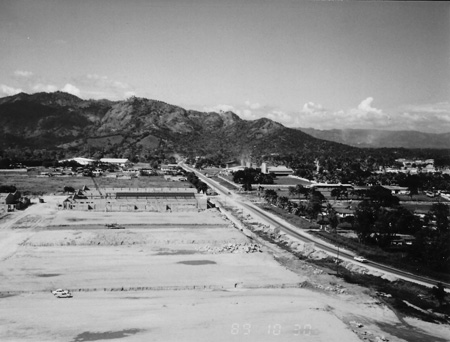
Where it began
The first chapter of Honduras' maquila industry was written beside the Caribbean Sea.
In 1976, the Constitutive Law of the Free Zone of Puerto Cortés established the formal starting point for the development of maquila operations in Honduras.
Puerto Cortés became home to the first industrial centers dedicated to this type of export production. Large manufacturing facilities began appearing near the port, creating a new source of employment for people from Puerto Cortés and surrounding communities.
The change was visible in everyday life. New work routines emerged around the Free Zone and thousands of Hondurans became part of an industrial activity that was still in its earliest stage.
Many workers from nearby communities traveled to the factories by bicycle. At the beginning and end of each shift, bicycles became part of the familiar scene surrounding the industrial activity in Puerto Cortés.
The framework for growth expands
A new stage began in April 1987 with Decree No. 37-87, which established the Law of Export Processing Industrial Zones.
The new framework supported the development of privately operated export-processing industrial zones and opened additional possibilities for investment, industrial parks and export production.
During this period, the maquila industry began moving beyond its initial concentration around Puerto Cortés and prepared the ground for the rapid growth that would follow in the Sula Valley.
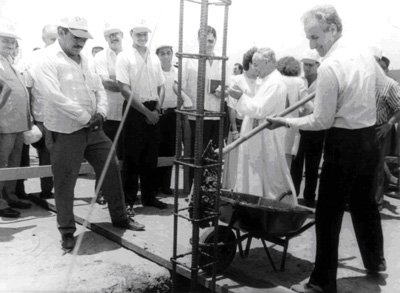

Choloma enters a new chapter
The inauguration of ZIP Choloma in 1990 marked an important stage in the growth of the maquila industry. New industrial parks appeared, additional investors established operations and Choloma became one of the country's principal centers of maquila activity.
Industrial growth was accompanied by changes in the city itself. Population increased and new banking offices, restaurants, cafés, fuel stations and other businesses appeared along the corridor toward Puerto Cortés.
Increased movement of workers, goods and heavy vehicles also contributed to changes in road infrastructure and strengthened the industrial connection between Choloma, San Pedro Sula and Puerto Cortés.
After the destruction caused by Hurricane Fifi in 1974, Choloma experienced profound change. Industrial development became part of the city's transformation into an important center for national and foreign investment.
The growth of the sector leads to the creation of AHM
As maquila operations and industrial parks expanded, the sector required an institution capable of bringing companies together and representing their common interests.
The Honduran Manufacturers Association was founded on October 29, 1991 as a private, apolitical and non-profit organization with its own legal personality.
Its purpose was to promote the development of maquila companies and exports, provide services to its members and represent them before public and private institutions at the national and international levels.
AHM emerged directly from the rapid growth of the manufacturing industry and became its institutional platform as the sector continued to develop.
 Honduran Manufacturers AssociationFounded October 29, 1991
The Free Zone framework reaches the national territory
In 1998, the Free Zone framework was extended throughout Honduras. By this stage, the maquila industry had already moved beyond the area where it first developed and was becoming an increasingly important component of the country's productive economy.